




Orchard Sprayers
Airblast sprayers work by using a powerful fan to generate a high-volume air stream that carries spray droplets into the tree canopy. The liquid spray from agricultural sprayers is atomized through nozzles and then pushed by the airflow so it penetrates dense foliage from top to bottom. This combination of air movement and spray allows for uniform coverage of leaves, branches, and fruit on both sides of the row. Airblast sprayers are especially effective in orchards because they can reach tall trees and deliver consistent application even in thick canopies.
Common nozzle types used in orchard sprayers include hollow-cone, full-cone, and air-induction nozzles, each serving different coverage and drift-control needs. Hollow-cone nozzles produce fine droplets that provide excellent canopy penetration, while air-induction nozzles create larger droplets that reduce drift. Spray patterns are usually adjusted vertically so that more output is directed toward the canopy zone where foliage density is highest. Proper nozzle selection and arrangement ensure uniform distribution while minimizing waste and off-target spraying.
Calibrating an orchard sprayer involves setting the correct application rate by adjusting pressure, nozzle output, ground speed, and airflow. The process typically starts by measuring tractor speed and checking each nozzle’s flow rate to ensure uniform output. Operators then calculate the spray volume per hectare or acre and adjust pressure or nozzle size accordingly. Calibration should be performed regularly, especially at the start of the season or after maintenance, to ensure accurate chemical application and avoid over- or under-spraying.
Sprayer selection depends on several factors including tree height, canopy density, row spacing, orchard layout, and crop type. The size of the orchard and available tractor power also play a role in choosing between mounted, trailed, or high-capacity sprayers. Growers must consider terrain conditions, spray volume requirements, and whether they need features such as adjustable air outlets or tower systems. Budget, ease of maintenance, and availability of spare parts are also important decision factors.
Spray drift can be minimized by using larger droplet sizes, reducing spray pressure, and selecting drift-reducing or air-induction nozzles. Proper calibration and directing airflow only toward the canopy help prevent chemicals from drifting beyond the target area. Spraying should be avoided during windy conditions, high temperatures, or low humidity. Adjusting fan speed, shutting off unused nozzles, and maintaining proper travel speed further reduce off-target movement and improve application efficiency.
Regular maintenance is essential to ensure consistent performance and long equipment life. This includes cleaning tanks, filters, and nozzles after each use to prevent clogging and chemical buildup. Hoses, seals, and pumps should be inspected for leaks or wear, and fan belts and bearings should be checked periodically. Nozzles should be replaced when worn to maintain accurate flow rates. Seasonal maintenance before and after spraying periods helps prevent breakdowns and ensures reliable operation.
Orchard terrain and tree size significantly influence the type of sprayer needed. Sloped or uneven terrain may require more stable trailed or mounted sprayers with strong traction and balance. Taller or denser trees often require airblast sprayers with higher airflow capacity or tower-style designs to reach upper canopies. Smaller or younger orchards may perform well with compact or lower-capacity sprayers. Matching airblast sprayer design to orchard structure ensures efficient coverage, reduced chemical waste, and better overall crop protection results.

Vineyard Sprayers
In vineyard sprayers, nozzle size and pressure must be matched to vine density, growth stage, and desired droplet size. Smaller nozzle orifices produce finer droplets that improve coverage on dense canopies and leaf undersides, while slightly larger nozzles generate coarser droplets that help reduce drift during early-season or windy conditions. Moderate operating pressure is generally preferred, as excessively high pressure creates drift-prone droplets and uneven deposition. The best setup delivers sufficient flow at stable pressure, ensuring uniform spray distribution across the vine wall without runoff or excessive loss.
Tractor speed directly influences spray volume per hectare and overall canopy coverage in vineyards. Driving too fast reduces contact time between the spray cloud and the vines, resulting in poor penetration and uneven coverage. Slower speeds allow droplets to settle more effectively on both sides of the canopy, improving disease and pest control. However, moving too slowly can lead to over-application and runoff. Proper calibration balances forward speed with nozzle output so that spray rates remain consistent across rows.
Air-assisted vineyard sprayers use a fan-generated air stream to carry spray droplets deep into the vine canopy. This airflow opens the foliage momentarily, allowing droplets to reach inner leaves, fruit zones, and the underside of foliage where pests and diseases often develop. Air assistance also helps droplets adhere better to plant surfaces and improves uniformity across both sides of the row. When properly adjusted, air-assisted systems increase spray efficiency while reducing chemical waste and drift.
PTO speed controls the fan and pump operation in most vineyard sprayers, directly affecting airflow strength and spray pressure. Maintaining the recommended PTO speed ensures consistent air delivery and stable spray output. If PTO speed is too low, airflow may be insufficient to move spray droplets through the canopy. Excessively high PTO speeds can increase drift, energy consumption, and mechanical wear. Correct PTO operation allows the sprayer to perform as designed and ensures repeatable, uniform application.
Row spacing and trellis system design strongly influence which type of vineyard sprayer is most effective. Narrow rows often require compact or narrow-profile sprayers with adjustable air outlets to avoid overspray and crop damage. Wider row spacing allows the use of larger airblast or tower sprayers with greater airflow capacity. Trellis systems such as vertical shoot positioning (VSP) benefit from directional airflow that targets a vertical canopy, while sprawling or divided canopies may require adjustable or multi-directional air outlets. Selecting a sprayer that matches row width and trellis structure ensures uniform coverage, efficient chemical use, and improved disease control.
Airblast Sprayers
Airblast sprayers are commonly classified by the way air is directed through the canopy. Radial (or axial-fan) airblast sprayers use a large rear-mounted fan that distributes air and spray outward in a circular pattern, making them suitable for many orchard and vineyard layouts. Tower airblast sprayers use vertical air ducts that direct airflow upward, allowing more precise targeting of tall or narrow canopies. Some models also feature cross-flow or dual-fan designs to improve uniformity. The choice depends on crop height, canopy structure, and row spacing.
Adjustable spouts or deflectors are highly beneficial because they allow operators to direct airflow and spray precisely where it is needed. By adjusting the angle and direction of the air outlets, operators can match spray distribution to canopy shape and growth stage. This reduces overspray, minimizes drift, and improves coverage efficiency. Adjustable components are especially valuable in orchards or vineyards with varying tree or vine sizes, making them a worthwhile investment for improving spray accuracy and reducing chemical waste.
Airblast sprayers differ from boom and mist sprayers mainly in how spray is delivered to the crop. Airblast sprayers use high-velocity air to carry droplets deep into dense canopies, making them ideal for orchards and vineyards. Boom sprayers rely on gravity and pressure to distribute spray downward and are better suited for field crops with uniform, low canopies. Mist sprayers produce very fine droplets and are often used where ultra-low-volume applications are needed, but they can be more prone to drift. Airblast sprayers provide a balance of penetration and control for perennial crops with complex canopy structures.
Calibrating an airblast sprayer involves setting the correct ground speed, nozzle output, airflow, and pressure to achieve the desired spray rate. The process starts by determining tractor speed and measuring individual nozzle flow rates to ensure consistency. Nozzle sizes and pressure are then adjusted to deliver the target volume per acre or hectare. Airflow settings should match canopy size to avoid under- or over-penetration. Regular calibration ensures uniform coverage, reduces chemical waste, and improves application accuracy throughout the season.
Ideal spray volume varies by crop type, canopy density, and growth stage. Vineyards and young orchards generally require lower spray volumes because of their smaller canopy size, while mature orchards with dense foliage need higher volumes to achieve full coverage. Early-season applications typically use lower volumes, increasing as foliage develops. The goal is to apply enough spray to wet the canopy uniformly without runoff. Matching spray volume to crop structure improves efficiency, effectiveness, and environmental safety.
Mounted Sprayers
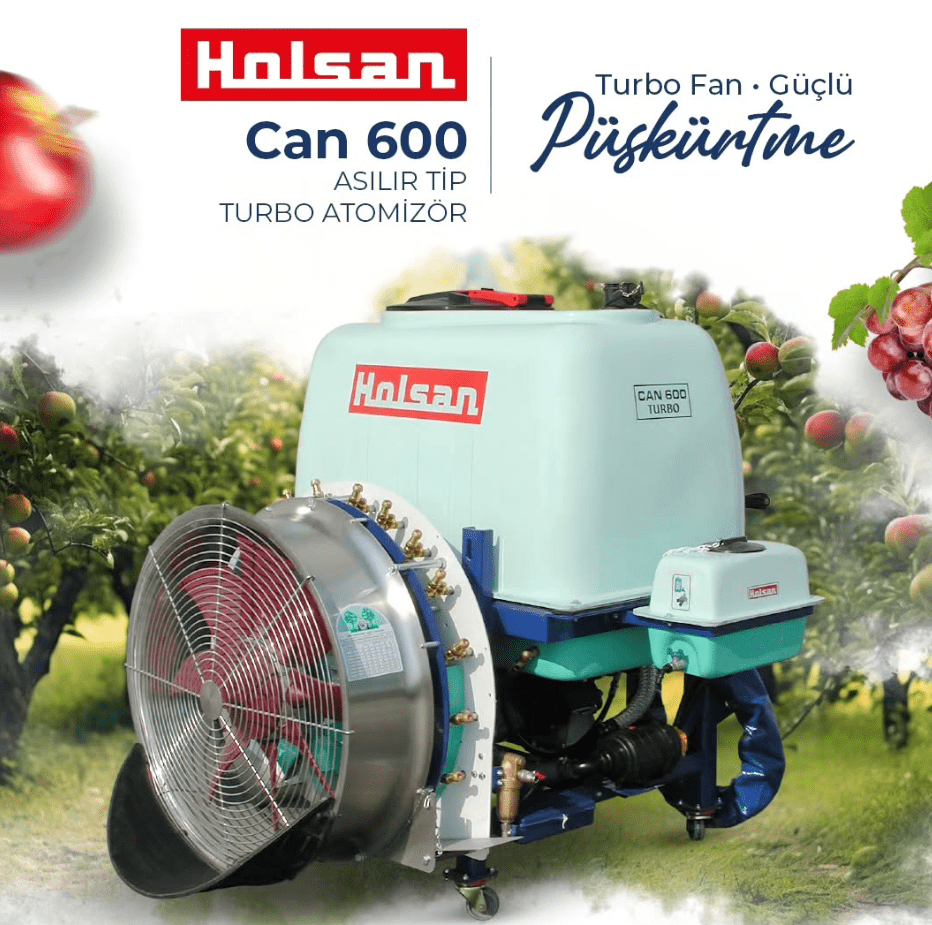
Mounted sprayers are spraying units that attach directly to a tractor’s three-point linkage and are carried entirely by the tractor during operation. They are typically more compact and maneuverable than trailed sprayers, making them ideal for smaller fields, orchards, vineyards, and areas with tight turning spaces. Trailed sprayers, by contrast, are pulled behind the tractor on their own wheels and usually have larger tanks and higher capacity. Mounted sprayers are easier to handle, require less storage space, and are generally more affordable, while trailed sprayers are better suited for large-scale operations with higher volume requirements.
The tractor horsepower required for a mounted sprayer depends on tank size, pump type, and whether the sprayer uses air assistance. Smaller mounted sprayers can operate with lower horsepower tractors, while larger models require more power to safely lift and operate the unit. PTO-driven pumps typically operate at standard PTO speeds, and sufficient engine power is needed to maintain consistent pressure and flow. Matching tractor horsepower to sprayer weight and PTO demand ensures stable operation, efficient spraying, and reduced strain on both tractor and equipment.
Tank capacity selection depends on field size, application rate, and refill convenience. Smaller tanks are suitable for small plots, orchards, or fragmented fields where maneuverability is important and refilling is frequent. Medium-capacity tanks work well for mid-sized farms, balancing efficiency and tractor load. Larger mounted tanks allow longer operating time without refilling but require stronger tractors and good lifting capacity. Choosing the right tank size helps optimize productivity while maintaining safe weight distribution.
Ground clearance can be a concern when using mounted sprayers, especially in taller crops or uneven fields. This can be managed by selecting sprayers designed with compact frames and higher mounting positions. Adjusting the tractor’s linkage height, using appropriate tire sizes, and choosing models with slim tank designs can help prevent crop damage. Operators should also adjust driving speed and row alignment to avoid contact with plants or obstacles during operation.
Mounted sprayers generally perform well on moderately uneven terrain due to their compact design and close integration with the tractor. However, because their full weight is carried by the tractor, balance and stability are important on slopes or rough ground. Proper weight distribution, front ballast, and correct hitch adjustment improve stability. Operators should reduce speed on uneven terrain to maintain control and ensure uniform spray application. With correct setup, mounted sprayers can operate effectively even in challenging field conditions.
Trailed Sprayers
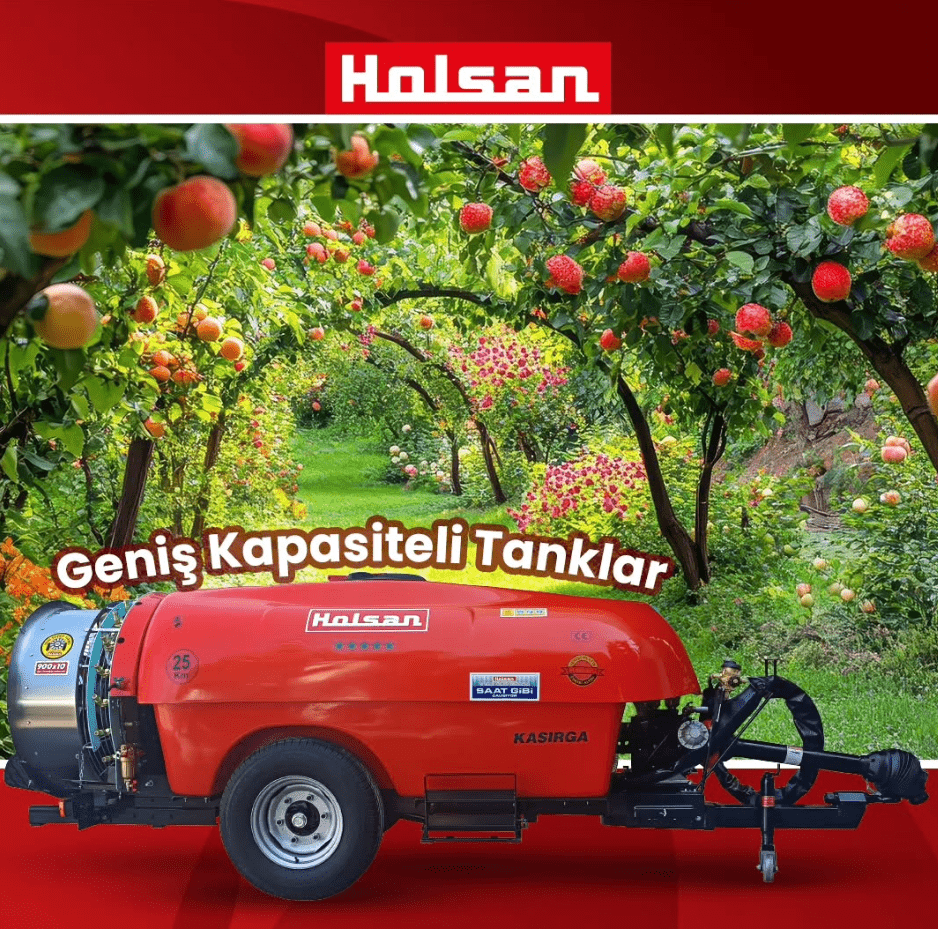
Trailed sprayers are spraying units pulled behind a tractor on their own wheels and connected via a drawbar or hitch. Unlike mounted sprayers, which are carried entirely by the tractor’s three-point linkage, trailed sprayers support their own weight, allowing them to carry much larger tanks and heavier components. This makes them ideal for larger-scale operations that require longer spraying times without frequent refilling. Mounted sprayers, in contrast, are more compact and easier to maneuver in small or irregular fields, while trailed sprayers prioritize capacity and efficiency over tight maneuverability.
Trailed sprayers are available with a wide range of tank capacities, typically starting from medium volumes and extending to very large capacities suitable for commercial farming. Smaller trailed models are often used in medium-sized farms, while high-capacity versions are designed for large-scale operations that require extended spraying intervals. Larger tanks reduce downtime for refilling and increase field productivity, but they also require tractors with sufficient towing power and braking capability to operate safely.
Trailed sprayers are generally more cost-effective for large farms because their higher capacity and efficiency reduce labor time and increase daily coverage. Although the initial investment may be higher than that of mounted sprayers, the cost per hectare treated is often lower over time. Fewer refills, faster operation, and the ability to cover wide areas make trailed sprayers a practical long-term investment for high-acreage operations where productivity and efficiency are priorities.
In tight spaces, trailed sprayers are less maneuverable than mounted sprayers due to their longer overall length and turning radius. Navigating narrow rows, sharp turns, or confined headlands can be more challenging, especially in small or irregularly shaped fields. Mounted sprayers are generally better suited for such environments because they follow the tractor more closely. However, some modern trailed sprayers are designed with steering axles or articulated drawbars to improve maneuverability and reduce turning difficulty.
Trailed sprayers can be used in orchards and vineyards, particularly in larger or more widely spaced plantings. Models equipped with air-assisted or airblast systems are suitable for delivering spray into tree and vine canopies. However, in narrow-row vineyards or high-density orchards, maneuverability can be a limitation. In such cases, compact trailed units or specialized orchard sprayers with narrow profiles and adjustable airflow are preferred to ensure effective coverage without damaging crops.
Tractor Mounted Sprayers
The tractor horsepower required for tractor mounted sprayers depends on tank size, pump type, and whether the sprayer includes air assistance. Smaller mounted sprayers can operate with lower horsepower tractors, while larger units require more power to safely lift and operate the equipment. Adequate horsepower is also necessary to maintain stable PTO speed and hydraulic performance during spraying. Choosing a tractor with sufficient lifting capacity and power ensures safe operation, consistent spray pressure, and reduced mechanical strain.
Tractor mounted sprayers are available in a range of tank capacities designed to suit different farm sizes and applications. Smaller tanks are ideal for small fields, spot spraying, or orchards where maneuverability is critical. Medium-capacity tanks suit mixed farming operations, offering a balance between coverage and weight. Larger mounted tanks allow longer spraying sessions but require tractors with higher lifting capacity. Selecting the right tank size helps optimize efficiency while maintaining stability and safety.
Mounted sprayers can perform well on uneven terrain when properly balanced and matched with the correct tractor. Because the sprayer’s weight is carried by the tractor, stability depends on correct hitch adjustment, front ballast, and appropriate driving speed. On uneven ground, slower operation helps maintain spray consistency and control. For high crops, mounted sprayers can be equipped with taller booms, air-assist systems, or adjustable spray outlets to ensure adequate canopy coverage without damaging plants.
Mounted sprayers are generally more affordable than trailed sprayers due to their simpler construction and smaller tank sizes. They have lower upfront purchase costs and typically lower maintenance expenses. Trailed sprayers, while more expensive, offer higher capacity and productivity, making them more economical for large-scale operations. For small to medium farms, mounted sprayers often provide better overall value by balancing cost, functionality, and ease of use.
Common pump types used in tractor mounted sprayers include diaphragm, piston, and centrifugal pumps. Diaphragm pumps are popular due to their durability and ability to handle chemicals safely, while piston pumps provide high pressure for demanding applications. Typical pressure ranges vary depending on the application, with lower pressures used for field spraying and higher pressures for orchard or specialized spraying. The chosen pump must deliver consistent flow and pressure suited to the nozzle setup and application rate.
Essential safety and performance features in mounted sprayers include agitation systems and filtration components. Agitators keep spray mixtures evenly mixed, preventing chemical settling and ensuring uniform application. Filters protect pumps and nozzles by removing debris and preventing blockages. Additional safety features often include pressure relief valves, clean water tanks for rinsing, and easy-access shutoff controls. These components improve reliability, operator safety, and spray accuracy during operation.
Jet Sprayers
Jet sprayers are spraying systems that use high-pressure liquid jets to project spray droplets toward the target, relying mainly on hydraulic force rather than large volumes of air. Unlike airblast sprayers, which use powerful fans to move droplets into the canopy, jet sprayers depend on pressure and nozzle design to achieve penetration. This makes jet sprayers simpler in construction and often more energy-efficient, but generally less effective in very dense canopies where airflow is needed to move leaves and deliver spray to inner surfaces.
Jet sprayers are best suited for crops with relatively open canopies or structured planting systems where spray penetration is easier to achieve. They are commonly used in vineyards, orchards with moderate foliage density, nurseries, and certain horticultural crops. Jet sprayers are also useful for targeted treatments, border spraying, and applications where precise directional spraying is needed. Their controlled output makes them suitable for situations where minimizing drift and overspray is important.
Preventing nozzle clogs and wear requires regular cleaning and filtration maintenance. Filters should be cleaned frequently to prevent debris from reaching the nozzles. Nozzles should be inspected for buildup, corrosion, or uneven spray patterns and replaced when wear affects performance. Flushing the system with clean water after each use helps prevent chemical residues from drying inside the system. Using clean water sources and proper strainers significantly extends nozzle life and ensures consistent spray output.
Jet sprayers can improve coverage in dense foliage by using properly selected nozzle sizes, higher operating pressure, and correct nozzle orientation to direct spray toward the target zone. Adjusting spray angles allows better penetration into canopy layers. However, because they lack forced airflow, their effectiveness in very dense foliage is enhanced by slower tractor speeds and multiple passes if needed. When correctly calibrated, jet sprayers can still provide effective coverage while maintaining precise control over spray placement.
Agricultural Sprayers
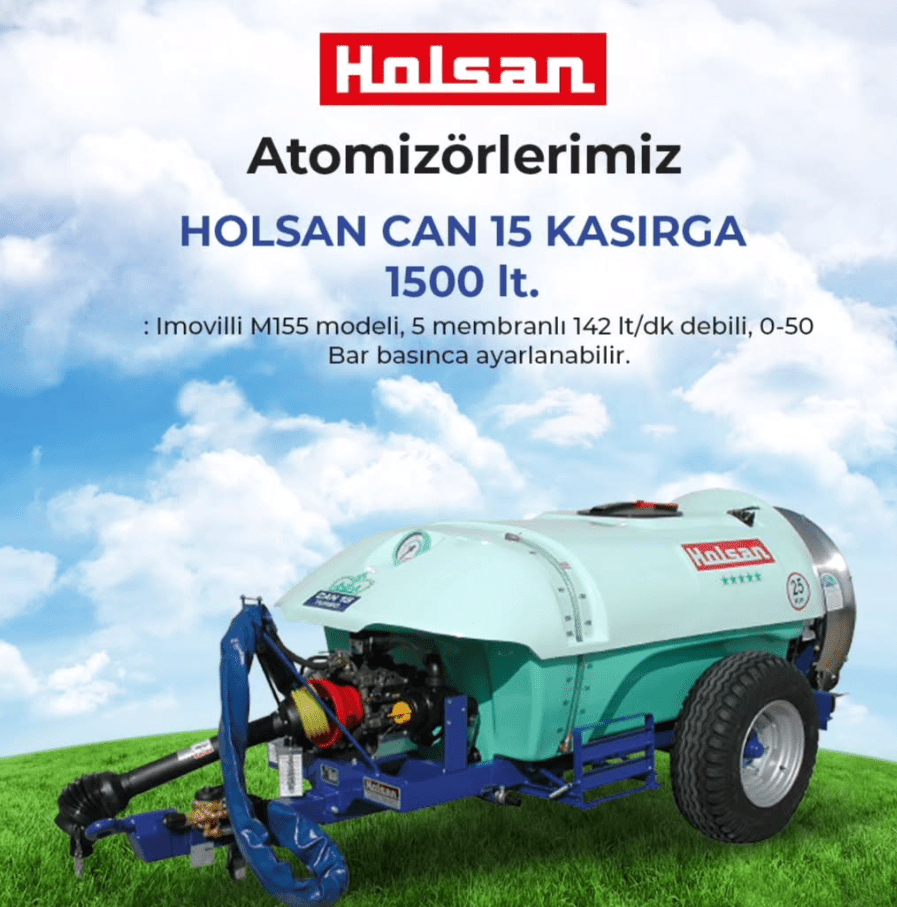
Agricultural sprayers come in several main types depending on crop type, field size, and application method. Common categories include mounted sprayers, trailed sprayers, and self-propelled sprayers for field crops, as well as airblast, jet, and mist sprayers for orchards and vineyards. Boom sprayers are widely used for row crops because they provide uniform coverage across wide areas, while air-assisted and airblast sprayers are designed to penetrate dense canopies. Handheld and backpack sprayers are used for small-scale or spot applications. Each type serves a specific purpose based on crop structure and scale of operation.
Sprayers should be cleaned after every use to prevent chemical residue buildup, nozzle blockage, and corrosion. Routine maintenance includes rinsing tanks, flushing hoses, cleaning filters, and checking nozzles for wear. More thorough inspections should be done regularly to examine pumps, seals, hoses, and pressure regulators. Seasonal maintenance before and after spraying periods helps ensure reliable operation and prolongs equipment life. Consistent cleaning and maintenance also improve spray accuracy and reduce the risk of crop damage caused by contamination or uneven application.
Orchards and row crops require different agricultural sprayer designs due to differences in canopy structure. Orchard crops typically need airblast or air-assisted sprayers that can deliver spray into tall, dense canopies and reach both sides of trees. Row crops, on the other hand, are best served by boom sprayers that distribute spray evenly across flat, uniform crop rows. Orchard sprayers focus on penetration and directional airflow, while row crop sprayers emphasize width, uniformity, and efficiency over large areas.
Several pump types are commonly used in agricultural sprayers, each offering reliable pressure for different applications. Diaphragm pumps are popular because they handle chemicals well and provide consistent pressure with minimal maintenance. Piston pumps are suitable for high-pressure applications and are often used in orchard sprayers. Centrifugal pumps are efficient for high-volume, low-pressure applications and are commonly found in large field sprayers. Selecting the right pump depends on pressure requirements, flow rate, and chemical compatibility.
Terrain plays a significant role in determining the most suitable sprayer type and its performance. Flat terrain allows for the use of larger, wider sprayers that can operate efficiently at higher speeds. Uneven or sloped terrain requires more stable equipment with good weight distribution and suspension to maintain consistent spray height and coverage. In hilly areas, mounted or compact sprayers may offer better control, while trailed or self-propelled sprayers may need advanced suspension and braking systems. Adjusting speed and setup based on terrain helps maintain accuracy and safety during application.
