




A vine is not a small tree. Trellised rows sit closer together than orchard lanes, the canopy is trained into a narrow wall rather than a rounded crown, and a tractor has far less room to maneuver between rows. Equipment built for orchards can still be used in a vineyard, but it is rarely the best fit.
This guide looks at what vineyard sprayers need to do differently, the types of vineyard spraying equipment available, and a real Holsan model built for narrower row spacing. Whether you are comparing a grape vineyard sprayer against a general orchard atomizer or simply looking for vineyard spraying machine that fits between your rows, width and airflow direction matter more than raw tank size.
It also covers the Holsan CAN 20 Narrow Type, a trailed turbo atomizer built specifically for the tighter geometry vineyards demand.
Why Vineyards Need Narrower, More Precise Coverage Than Orchards
An orchard’s canopy is roughly round and spaced widely enough for a standard-width machine to pass between rows without brushing branches. A vineyard’s canopy is trained flat, along a wire, with rows often close enough that a wide atomizer simply will not fit or will damage the vines trying.
The airflow also needs to be shaped differently. Instead of pushing spray up and out in all directions, a vineyard sprayer needs to direct it sideways and evenly along a narrow wall of leaves, reaching both faces of the canopy without wasting spray into the row gap.
Types of Vineyard Spraying Equipment
Narrow Trailed Atomizers: Built with a slimmer chassis and turbo housing specifically to pass between tight rows without contacting vines.
Tower Sprayers: Taller units that distribute airflow vertically, useful where trellis height is greater than standard.
Tunnel and Recovery Sprayers: Enclose the row to capture and reuse spray that would otherwise drift past the canopy, though at a higher equipment cost.
For most mid-size vineyards, a narrow trailed atomizer offers the best balance of coverage, cost, and maneuverability between rows.

What Makes a Grape Vineyard Sprayer Effective
Chassis Width: The machine has to physically fit the row spacing with margin to spare, or every pass risks vine damage.
Directional Airflow: Nozzles and fan housing angled to push spray sideways into the canopy wall, not just outward in a wide cone.
Adjustable Pressure: Different growth stages and treatments call for different pressure ranges, so a 0-50 bar adjustable pump covers the full season.
Durable Tank Construction: A steel wave breaker and anti-corrosive tank hold up to the frequent, season-long use vineyards typically require.
Matching a Vineyard Spraying Machine to Row Width and Trellis Height
Row spacing is the first number to check before anything else. A machine that is even slightly too wide for the narrowest rows on the property will limit where it can actually be used, regardless of how good its airflow is on paper.
Trellis height matters next. Lower, traditional trellising suits a standard trailed atomizer, while taller modern trellis systems benefit from a machine with a taller fan housing or tower-style airflow to reach the top of the canopy evenly.
Spotlight: Holsan CAN 20 Narrow Type
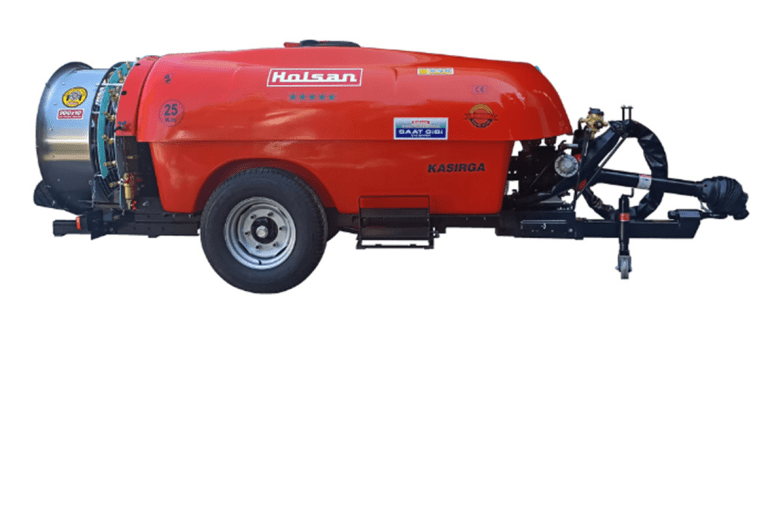
The Holsan CAN 20 2000 LT (Narrow Type) trailed turbo atomizer is built with a slimmer profile specifically for vineyard and tight-row use. Its 2,000 liter anti-corrosive fiberglass tank includes a steel wave breaker, hydraulic mixer, lockable lid, nybolt strainer, and level indicators front and side.
Power comes from an Imovilli M155 5-diaphragm pump delivering 142 liters per minute at an adjustable 0-50 bar, run through an 80-degree wide-angle PTO shaft with an adjustable tow-bar. The turbo unit is a 900mm fan housed in a stainless-steel conveyor with a gearbox-driven system covering 16 nozzles, directing airflow along the canopy rather than out in a wide arc.
A tractor-mounted Braglia controller manages the system, and the machine delivers an even 15 meters of range to both the left and right, 30 meters total — built to treat both sides of a vine row in a single pass without the machine itself needing to be wider than the row allows.
Seasonal Maintenance for Vineyard Equipment
Check Nozzle Alignment Each Season: Since coverage depends on precise directional airflow, a nozzle knocked out of alignment during a tight pass between rows can go unnoticed until coverage gaps show up on the vine.
Rinse Thoroughly After Each Application: Vineyards often spray more frequently than orchards during the growing season, so residue buildup happens faster without consistent rinsing.
Inspect the Chassis for Contact Damage: Tight row spacing means occasional contact with vines or posts. Check the frame and turbo housing periodically for dents that could affect airflow direction.
Conclusion
Choosing between vineyard sprayers comes down to whether the machine actually fits your rows and directs airflow the way a trellised canopy needs, not just how large its tank is. A narrower, well-matched machine will out-perform a wider, more powerful one that cannot get between the vines cleanly.
A vineyard spraying machine sized and shaped for your specific row geometry, maintained through the season, protects the crop that the rest of the vineyard’s work depends on.
